What This Page Covers
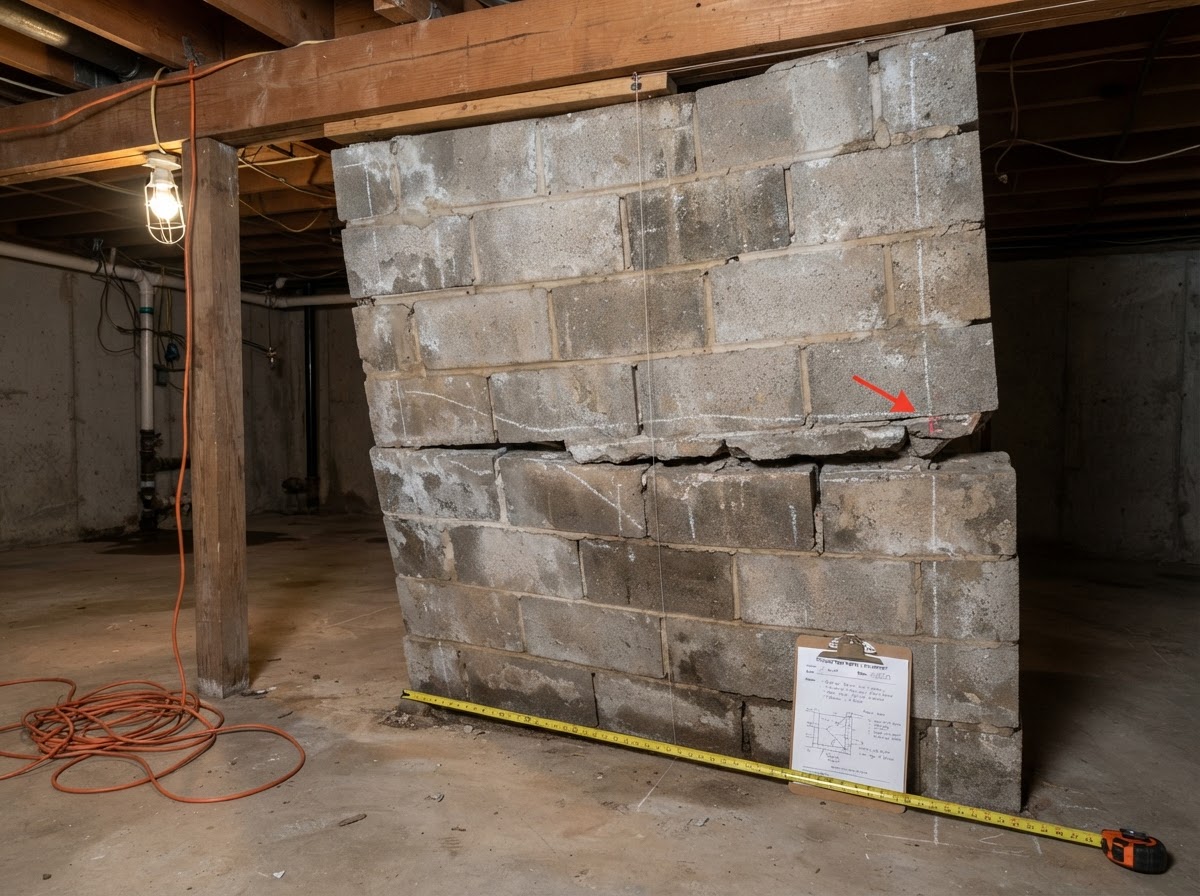
A bowing, leaning or bulging basement or foundation wall is being pushed inward by soil pressure outside it. The warning signs are a wall that is no longer plumb, a horizontal crack along a mortar line, and sometimes a wall that feels springy at the center. Horizontal cracks on a block wall are a red flag that the wall is losing the fight against the soil.
Bowing Wall Repair in Glen Allen & the Henrico–Hanover area
A bowing, leaning, or bulging basement or foundation wall is being pushed inward by the soil pressing against it from outside. The warning signs are a wall that's no longer plumb, a horizontal crack along a mortar line, and sometimes a wall that feels slightly springy at the center when pressed. A horizontal crack on a block wall is a particular red flag — it means the wall is losing the fight against the soil. We stabilize the wall so it stops moving inward: wall anchors that pull it back toward plumb over time, steel braces that hold it where it is, or carbon-fiber straps for walls caught early. We also address the soil and water pressure that caused the bowing, so the repair holds for the long run.
Proud to Serve Glen Allen & the Henrico–Hanover Area
We work throughout Glen Allen and the towns around it. If your home is in any of these communities, we can come take a look.
- Mechanicsville, VA Hanover County
- Laurel, VA Henrico County
- Short Pump, VA Henrico County
- Tuckahoe, VA Henrico County
- Highland Springs, VA Henrico County
- Lakeside, VA Henrico County
- Ashland, VA Hanover County
What's Included
Wall plumb measurement
We measure how far the wall has bowed and whether it's still moving, to set the right repair.
Wall anchors
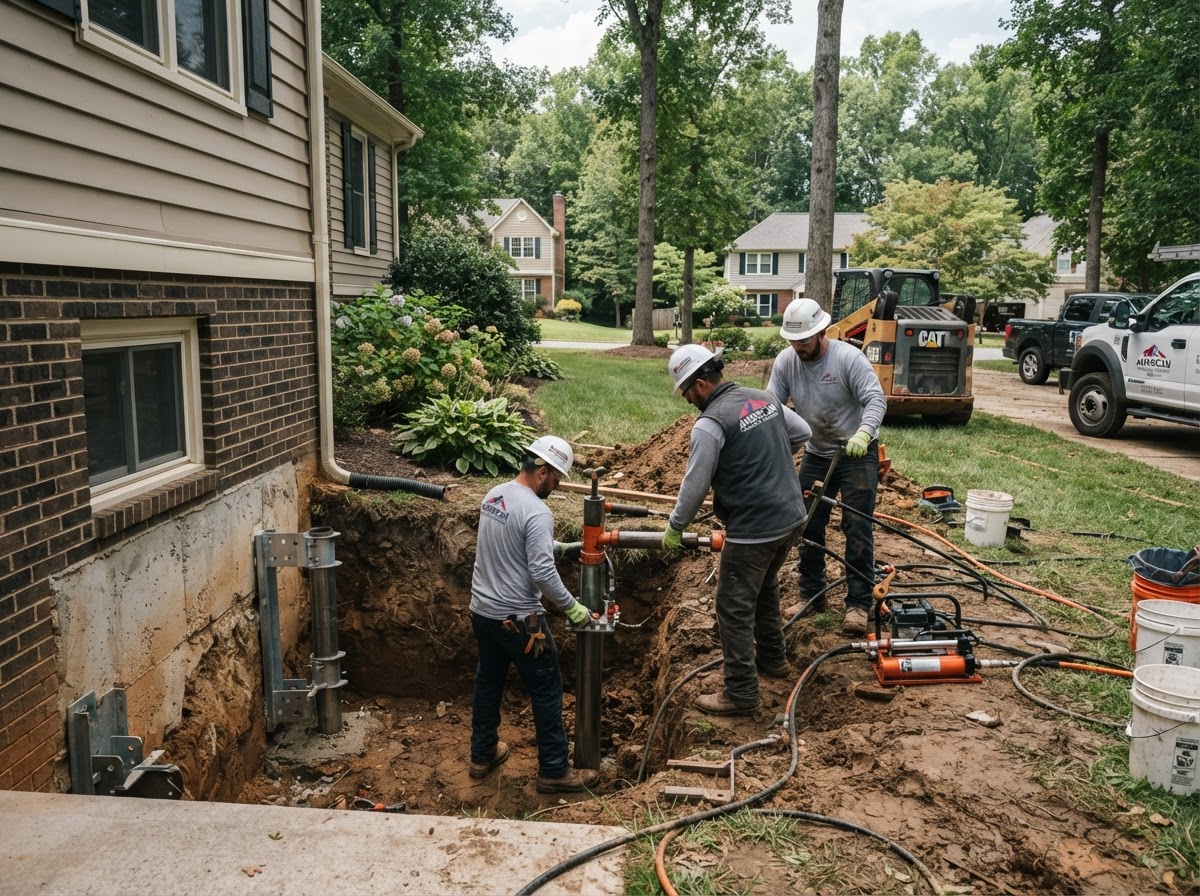
Anchors through the wall into stable soil pull a bowed wall back toward plumb over time.
Steel braces
Heavy steel braces hold a wall where it is and stop further inward movement.
Carbon-fiber reinforcement
Low-profile straps reinforce a wall caught early, with minimal disruption to the space.
Pressure relief
We address the water and soil pressure outside so the wall isn't fighting the same load again.

Why This Happens in Glen Allen
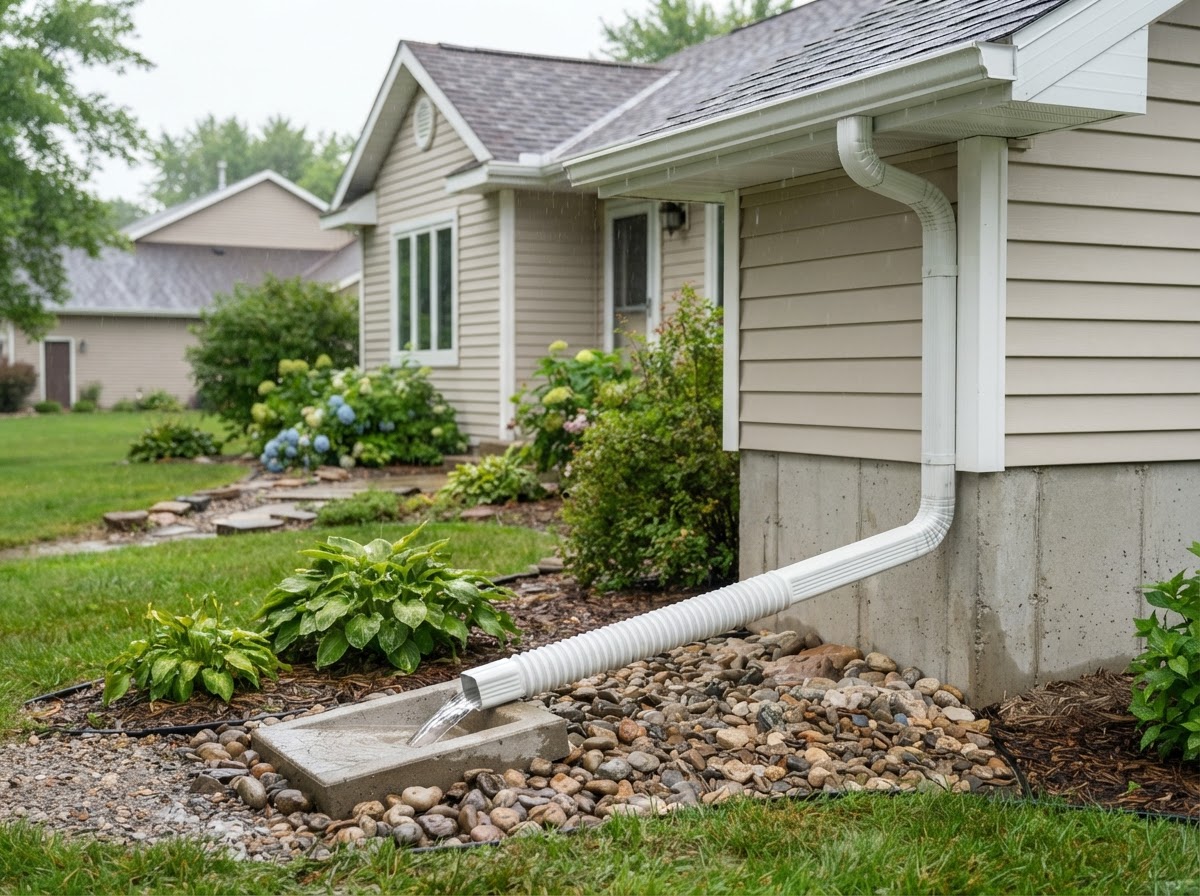
Bowing walls are a soil-pressure problem, and our soil generates a lot of pressure. The clay around Glen Allen and the Henrico–Hanover towns swells substantially when wet and shrinks when dry, so the wall behind it gets pushed and released with every rain and every dry spell. With more than 40 inches of rain a year, that push is constant. Add poor drainage that saturates the soil against one wall, or a downspout dumping water in a corner, and the pressure climbs. Many of our basement walls are older block construction that's been resisting that cycle for decades, and a horizontal crack is often the wall finally starting to yield. That's why horizontal cracks here get taken seriously.
How to Help Prevent It
Reduce the pressure and the wall has an easier job. Keep gutters clear and direct downspouts well away from the wall. Slope the ground so water runs away, not toward, the foundation, and avoid water-trapping planting beds right against a basement wall. In dry spells, steady soil moisture prevents the clay from shrinking and then swelling hard when the rain returns. If you spot a horizontal crack or a wall that looks off, don't wait — bowing tends to progress, and early reinforcement is far less costly than a full rebuild.
Bowing Wall Repair Cost Guide
We won't invent a price before we've seen your home. Here's what affects the cost of each kind of repair.
| Repair type | Typical price | What affects cost |
|---|---|---|
| Early-stage carbon-fiber reinforcement | Free quote after inspection | How many walls, how much bow, and whether the wall is still moving. |
| Wall anchor or brace stabilization | Free quote after inspection | Wall length, degree of bow, interior vs. exterior access, and whether anchors can be installed. |
| Bowing with water-pressure repair | Free quote after inspection | Whether drainage, grading, or exterior excavation is also needed to relieve the pressure. |
Why Choose Us for Bowing Wall Repair
We measure the bow first
How far and whether it's moving dictates the repair — we don't guess from a glance.
Right method, right stage
Straps for early bowing, anchors or braces for more — we match the fix to the wall.
We relieve the pressure
Water and soil get addressed so the wall isn't pushed back to the same point again.
Concerned About bowing wall repair?
A free, honest visit settles the question. We'll look carefully and tell you plainly what your home needs.
Our Process
- 1
Wall inspection
We measure the bow, check for horizontal cracks, and confirm whether the wall is still moving.
- 2
Honest plan
We recommend straps, anchors, or braces based on how far the wall has gone.
- 3
Stabilization
The reinforcement is installed, and anchors are tightened to pull the wall back over time.
- 4
Pressure & follow-up
We address drainage outside the wall and show you how to monitor for any change.
How dangerous is a bowing basement wall?
A bowing wall is a real concern and shouldn't be left to progress, though it's rarely an immediate collapse risk. The wall is being pushed inward by soil pressure and, over time, can bow to the point of serious structural failure. A horizontal crack along a mortar line is the clearest warning sign. The good news is that bowing is very repairable — the earlier it's caught, the simpler and less costly the fix. If you see a horizontal crack or a wall that's visibly off, have it looked at soon rather than waiting for it to worsen.
Can a bowing wall be straightened, or just stopped?
Both, depending on the method. Wall anchors can be tightened over time to gradually pull a bowed wall back toward plumb, so some straightening is often possible. Steel braces typically hold the wall where it is and stop further movement. Carbon-fiber straps reinforce a wall that's still in early stages. How much straightening is realistic depends on how far the wall has bowed and its condition — we measure it and tell you honestly what each method can achieve before any work begins.
Why do horizontal cracks matter more than vertical ones on a block wall?
On a block foundation wall, a horizontal crack usually means the wall is bending inward under soil pressure — the mortar line is the weak point where the wall is starting to fold. A vertical crack is more often from settlement or shrinkage. Because a horizontal crack signals active inward pressure, it tends to get worse and points toward a bowing-wall repair, not just sealing. That's why we take horizontal cracks seriously and check the wall for plumb whenever we see one.
Our Other Services
Foundation problems often overlap. Here are the other repairs we handle across Glen Allen & the Henrico–Hanover area.
Get Your Free Estimate
Tell us what's going on. We'll call you back to schedule a free, no-pressure look at your foundation.
No obligation. We answer questions honestly and never pressure homeowners into repairs they don't need.