What This Page Covers
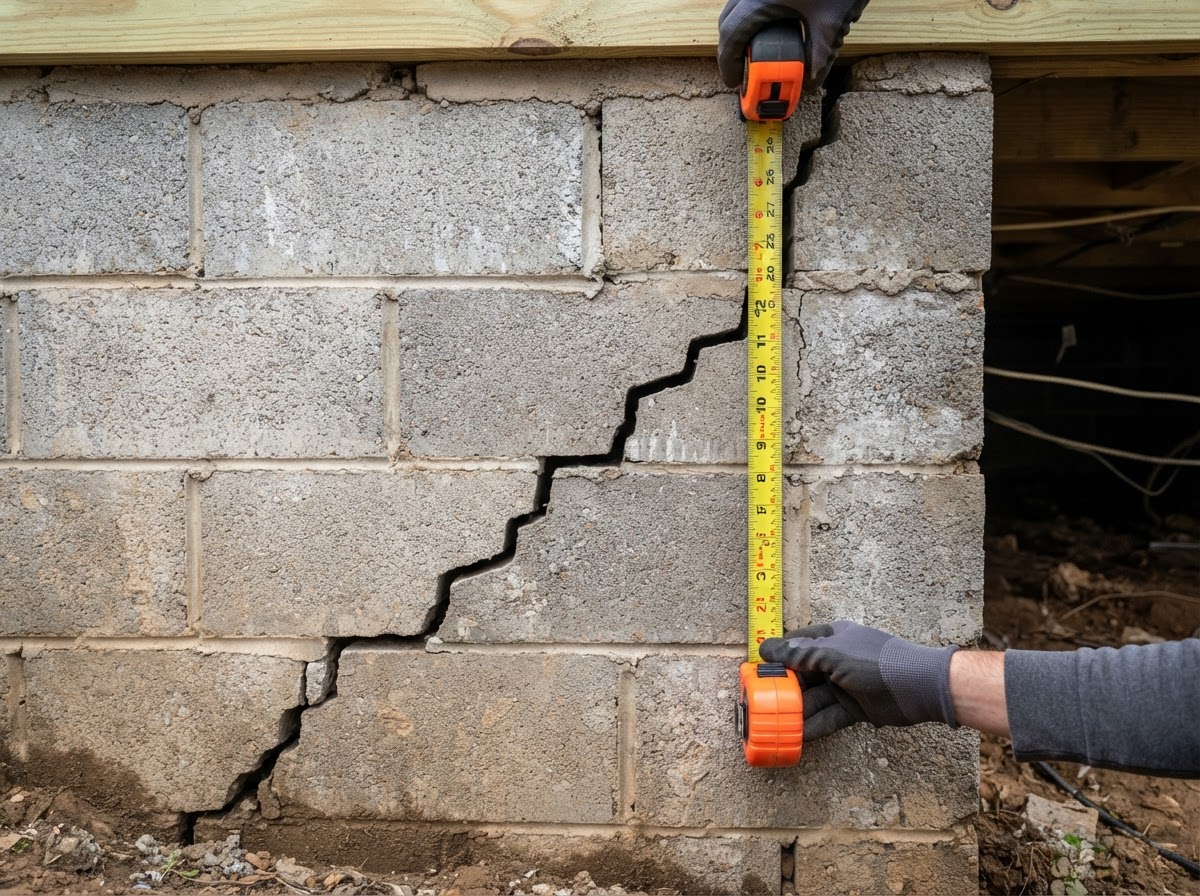
Cracks in a foundation wall or slab are the most common sign that something is moving beneath a home. We read the crack's width, direction and location to tell cosmetic shrinkage cracks from structural ones that need reinforcement. Stair-step cracks in block, vertical cracks in poured concrete and horizontal cracks each point to a different cause.
Foundation Crack Repair in Glen Allen & the Henrico–Hanover area
A crack in your foundation is the most common reason homeowners call us — and the one where an honest read matters most. Some cracks are just concrete doing what concrete does as it cures and the house settles. Others are the first sign that the soil beneath your home is moving and the wall is losing strength. The difference is in the crack's width, its direction, where it sits, and whether it's changing. We read all of that before we say a word about repair. If a crack is cosmetic, we tell you how to watch it. If it's structural, we match the fix to the cause — injection to seal, reinforcement to restore strength, or piers to stop the movement underneath.
Proud to Serve Glen Allen & the Henrico–Hanover Area
We work throughout Glen Allen and the towns around it. If your home is in any of these communities, we can come take a look.
- Mechanicsville, VA Hanover County
- Laurel, VA Henrico County
- Short Pump, VA Henrico County
- Tuckahoe, VA Henrico County
- Highland Springs, VA Henrico County
- Lakeside, VA Henrico County
- Ashland, VA Hanover County
What's Included
Crack diagnosis
We measure width, follow the direction, and compare it to the home's movement to tell cosmetic from structural.
Injection sealing
Epoxy or polyurethane injection fills and seals cracks in poured concrete to stop water and restore bond.
Structural reinforcement
Carbon-fiber straps or steel stabilize a cracked wall that has lost strength, stopping further movement.
Block & brick cracks
Stair-step and vertical cracks in block and brick foundation walls, read and repaired for the cause.
Monitoring plan
For stable, non-structural cracks, we show you how to track changes so you know if they ever need more.

Why This Happens in Glen Allen
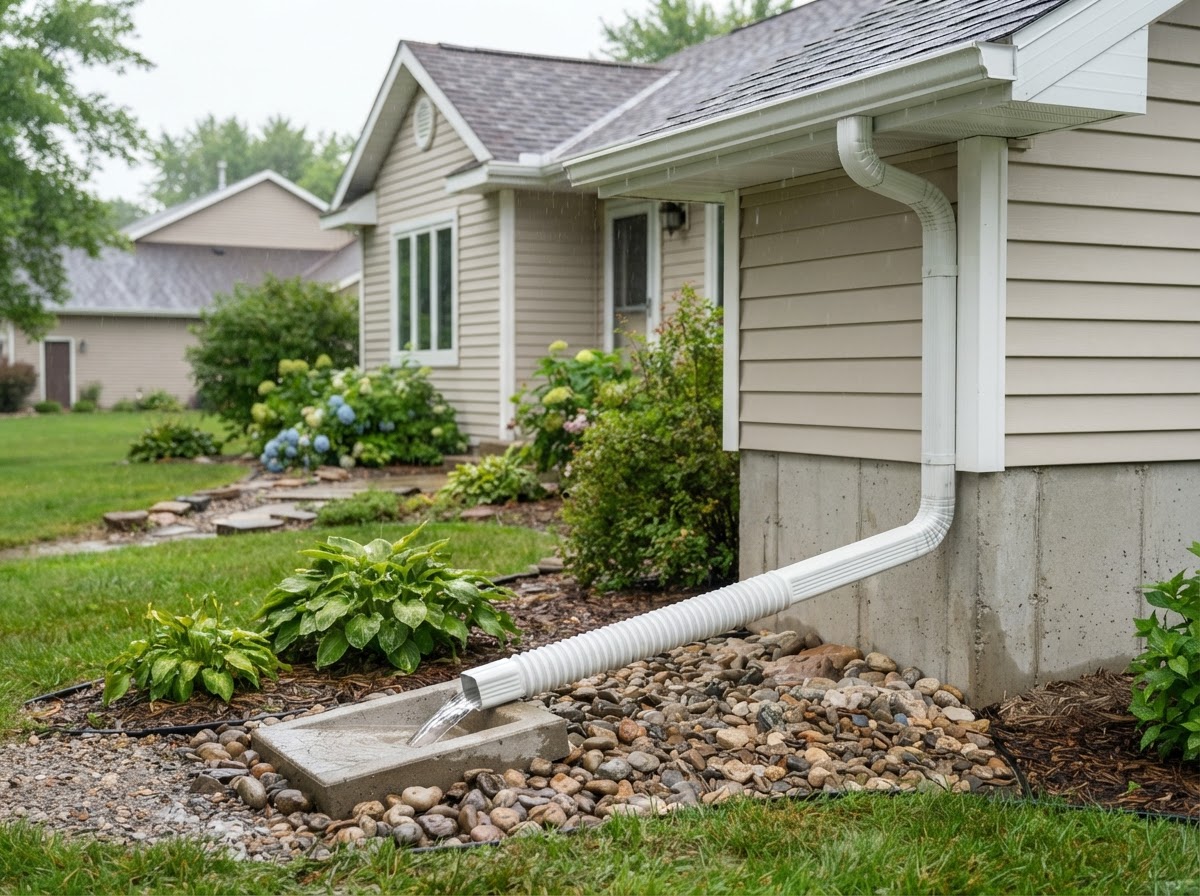
Glen Allen sits on the Fall Line where the Piedmont meets the Coastal Plain, and the soils beneath our homes shift between the two. Much of Henrico and Hanover has clay-heavy soil that swells when it's wet and shrinks when it's dry, and we get over 40 inches of rain a year on top of humid summers and winter freeze–thaw cycles. That expansion and contraction works on a foundation constantly. Many homes here are older block-foundation or crawl-space houses that have already done decades of that cycle, and newer subdivisions often sit on compacted fill that can settle unevenly. All of that shows up as cracks — which is why reading the crack correctly matters more here than almost anywhere.
How to Help Prevent It
Keep gutters clear and extend downspouts well away from the foundation so water doesn't pool against it. Grade the soil so it slopes away from the house, and keep ground moisture fairly steady during dry spells — a soaker hose in a drought helps prevent the clay from shrinking and pulling away from the wall. Watch for new cracks or ones that change, and photograph them with a ruler in the shot so you can compare over time. Catching a crack early, while it's still cosmetic, is the cheapest repair there is.
Foundation Crack Repair Cost Guide
We won't invent a price before we've seen your home. Here's what affects the cost of each kind of repair.
| Repair type | Typical price | What affects cost |
|---|---|---|
| Cosmetic crack sealing (injection) | Free quote after inspection | Number and length of cracks, and whether epoxy or polyurethane is the right material. |
| Structural crack reinforcement | Free quote after inspection | Wall size, whether carbon-fiber straps or steel are needed, and how much of the wall is affected. |
| Crack plus underlying movement | Free quote after inspection | Whether piers or other stabilization are also needed to stop the cause, not just seal the crack. |
Why Choose Us for Foundation Crack Repair
We read cracks before we quote
Not every crack is a problem. We tell you which is which before any talk of repair.
The right seal for the right crack
Epoxy for strength, polyurethane for flexibility and water — we pick the material that fits your crack.
We fix the cause, not just the line
If water or soil movement is driving the crack, we address that so it doesn't reopen.
Concerned About foundation crack repair?
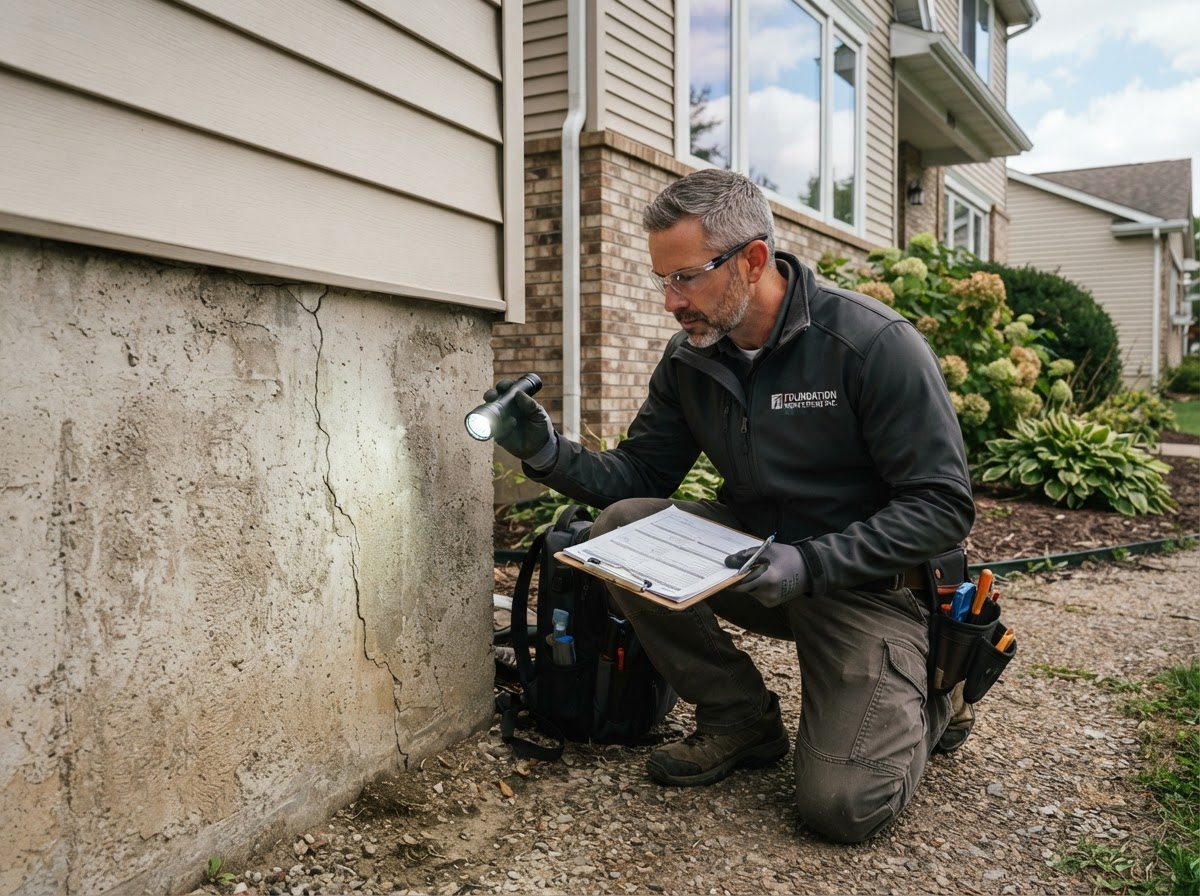
A free, honest visit settles the question. We'll look carefully and tell you plainly what your home needs.
Our Process
- 1
Free inspection
We visit, measure the crack, and read it against the home's overall movement.
- 2
Honest diagnosis
We tell you whether it's cosmetic or structural and what — if anything — to do.
- 3
Targeted repair
We seal or reinforce the crack with the method that fits, keeping disruption small.
- 4
Follow-up
We show you how to monitor it and what would change our recommendation.
Foundation Crack Repair FAQ
Questions we hear most about this repair. Call us with anything else.
Are all foundation cracks serious?
No. Hairline cracks under about 1/8 inch that haven't changed are usually just concrete curing or minor settling, and they can be watched. What concerns us are wider cracks, stair-step cracks in block, horizontal cracks, and any crack that's growing or paired with sticking doors and sloping floors. We read the crack's width, direction, and whether it's changing before we say anything about repair — and if it's fine, we tell you so.
What's the difference between a vertical and a horizontal crack?
Vertical cracks in a poured concrete wall are often from shrinkage or minor settling and can be sealed. A horizontal crack, especially along a mortar line in a block wall, is a bigger red flag — it usually means the wall is being pushed inward by soil pressure and may be bowing. Horizontal cracks tend to need reinforcement or stabilization, not just sealing. That's a key distinction we look for on every visit.
Will sealing a crack stop it from coming back?
Sealing stops water and restores the concrete's bond, but if the soil or water pressure underneath is still driving movement, the crack can reopen nearby. That's why we look past the crack to the cause — drainage, soil moisture, settlement. If the cause is addressed, the seal holds. If not, we tell you what else is needed so you're not paying for a repair that won't last.
Our Other Services
Foundation problems often overlap. Here are the other repairs we handle across Glen Allen & the Henrico–Hanover area.
Get Your Free Estimate
Tell us what's going on. We'll call you back to schedule a free, no-pressure look at your foundation.
No obligation. We answer questions honestly and never pressure homeowners into repairs they don't need.