What This Page Covers
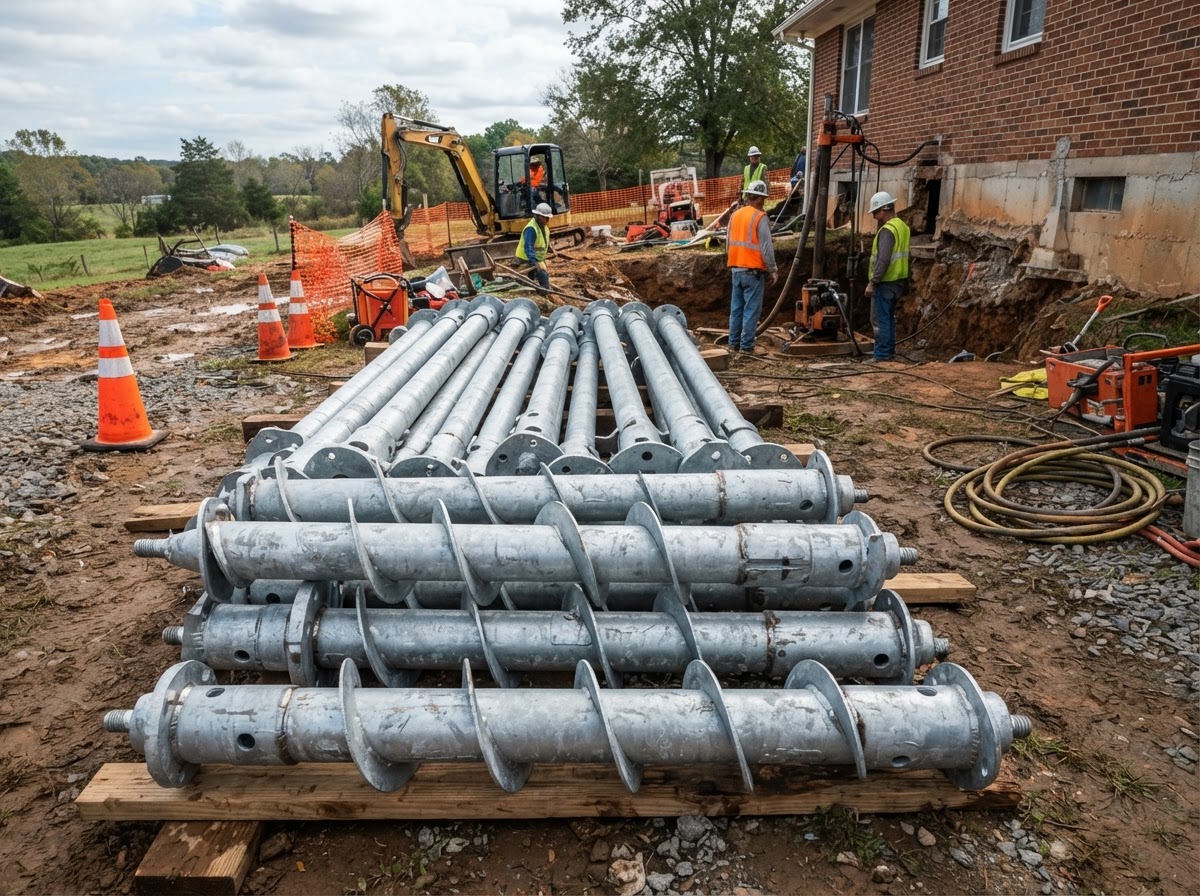
Piers are the repair method behind most settlement and sinking fixes. They drive or screw down past the unstable soil near the surface to reach load-bearing strata, then transfer the home's weight to that stable layer. We use push piers for heavier loads and helical piers where soil is softer or we need to verify capacity as we go.
Pier Installation in Glen Allen & the Henrico–Hanover area
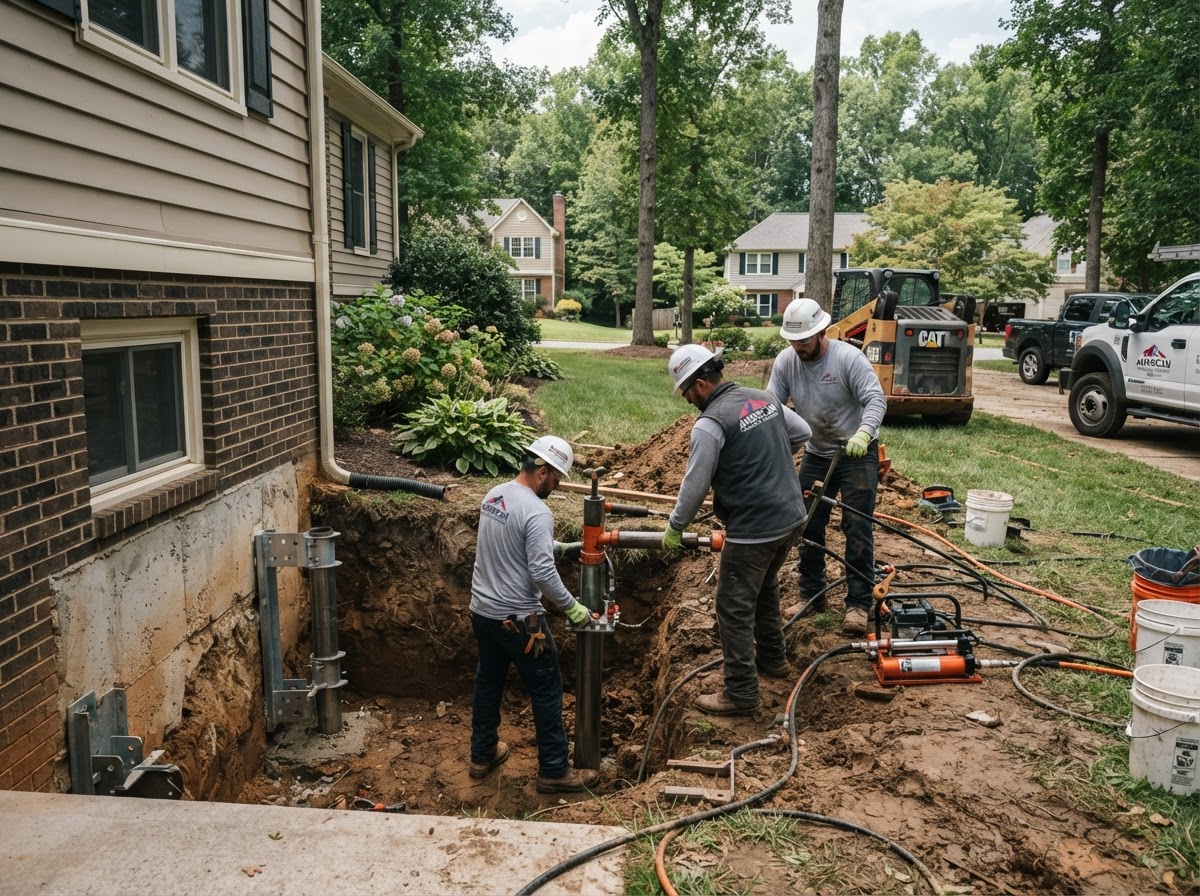
Piers are the repair method behind most settlement and sinking fixes. They drive or screw down past the unstable soil near the surface to reach load-bearing strata, then transfer the home's weight to that stable layer. We use push piers for heavier loads and helical piers where the soil is softer or we need to verify capacity as we go. Installation day is less disruptive than most homeowners expect: small excavations at the pier locations, hydraulic driving of the pier, brackets under the footing, then lifting the home toward level. We explain which pier fits your soil and your home before any work starts, so the repair is built for the long haul.
Proud to Serve Glen Allen & the Henrico–Hanover Area
We work throughout Glen Allen and the towns around it. If your home is in any of these communities, we can come take a look.
- Mechanicsville, VA Hanover County
- Laurel, VA Henrico County
- Short Pump, VA Henrico County
- Tuckahoe, VA Henrico County
- Highland Springs, VA Henrico County
- Lakeside, VA Henrico County
- Ashland, VA Hanover County
What's Included
Soil & pier selection
We read the soil and the home's weight to choose push piers, helical piers, or both.
Push pier installation
Hydraulically driven piers use the home's weight to reach stable soil for heavy loads.
Helical pier installation
Screwed-in piers suit lighter structures and softer soil, with verifiable holding capacity.
Lift toward level
Once piers bear on stable strata, we lift the settled section back toward level where safe.
Site cleanup
Excavations are backfilled and the work area is tidied so the yard looks cared for.

Why This Happens in Glen Allen
Piers matter here because the problem soil is near the surface. Around Glen Allen and the Henrico–Hanover area, the top few feet are often clay that swells and shrinks, fill that consolidates, or organic soil — none of it reliable enough to hold a home forever. Beneath that sits more stable strata. Piers bridge the two, skipping the trouble layer and setting the home's weight on something solid. With our older homes on aging foundations and newer subdivisions on compacted fill, piers are the answer when a corner is settling or sinking, because they don't depend on the very soil that's causing the problem to support the repair.
How to Help Prevent It
Piers are a repair, not prevention — but you can reduce the chance you'll need more of them. Steady soil moisture keeps the clay from shrinking away from footings, and good drainage prevents the saturation that weakens soil. If one corner of your home has been stabilized with piers, keep water away from the other corners too. And after piers are in, watch for any new movement nearby; a piered section is solid, but untreated sides can still settle on their own over time.
Pier Installation Cost Guide
We won't invent a price before we've seen your home. Here's what affects the cost of each kind of repair.
| Repair type | Typical price | What affects cost |
|---|---|---|
| Single-side pier installation | Free quote after inspection | Number of piers, depth to stable soil, and the weight the piers must carry. |
| Full perimeter stabilization | Free quote after inspection | How many sides need support and whether a lift toward level is included. |
| Push vs. helical pier choice | Free quote after inspection | Soil type, home weight, and access determine which pier — and helical can cost more for verifiable capacity. |
Why Choose Us for Pier Installation
Right pier for your soil
Push for heavy loads, helical for soft soil — we pick based on what's actually under your home.
Minimal disruption
Small excavations and tidy backfill mean your yard isn't torn up for weeks.
Built to hold
Piers bear on stable strata, so the repair doesn't depend on the soil that caused the problem.
Plain explanation
We tell you which pier, how many, and why — before any work is scheduled.
Concerned About pier installation?
A free, honest visit settles the question. We'll look carefully and tell you plainly what your home needs.
Our Process
- 1
Free inspection & soil read
We assess the movement and the soil to decide which pier and how many you need.
- 2
Clear plan & estimate
We lay out pier locations, type, and the goal — stabilize, and lift where it's safe.
- 3
Installation day
Small excavations, the piers are driven or screwed to stable soil, and brackets go under the footing.
- 4
Lift & cleanup
We lift toward level where appropriate, backfill, and leave the site tidy.
Push piers vs. helical piers — how do you decide which I need?
It comes down to your soil and your home. Push piers are driven using the home's own weight, so they suit heavier structures and firmer soil — the weight itself proves they're bearing. Helical piers are screwed in like an augur and work well for lighter structures and softer soil, and we can verify their holding capacity as we install. Sometimes a job uses both. We read your soil and the weight involved, then tell you which pier fits and why before any work is scheduled — there's no one-size-fits-all answer.
How deep do the piers go?
As deep as needed to reach stable, load-bearing soil — which varies by your lot. The unstable layer near the surface might be a few feet or many feet thick, and piers are driven or screwed until they hit strata that can hold the home's weight. Push piers are driven to refusal, meaning they've hit something solid; helical piers are advanced to a measured torque that confirms capacity. We don't pick the depth ahead of time — the soil tells us when we've gone deep enough, and that's part of why a free inspection comes first.
Will installing piers tear up my yard?
Much less than most homeowners expect. Installation uses small excavations — usually a few square feet at each pier location along the footing — rather than trenching the whole perimeter. Equipment is brought in close to the work spot, the pier is driven or screwed in, the bracket is set under the footing, and the excavation is backfilled and tidied. There's some short-term disruption, but we keep it as small as possible and leave the site cleaned up. Landscaping near the work spots may need a touch-up, and we tell you that upfront.
Our Other Services
Foundation problems often overlap. Here are the other repairs we handle across Glen Allen & the Henrico–Hanover area.
Get Your Free Estimate
Tell us what's going on. We'll call you back to schedule a free, no-pressure look at your foundation.
No obligation. We answer questions honestly and never pressure homeowners into repairs they don't need.