What This Page Covers
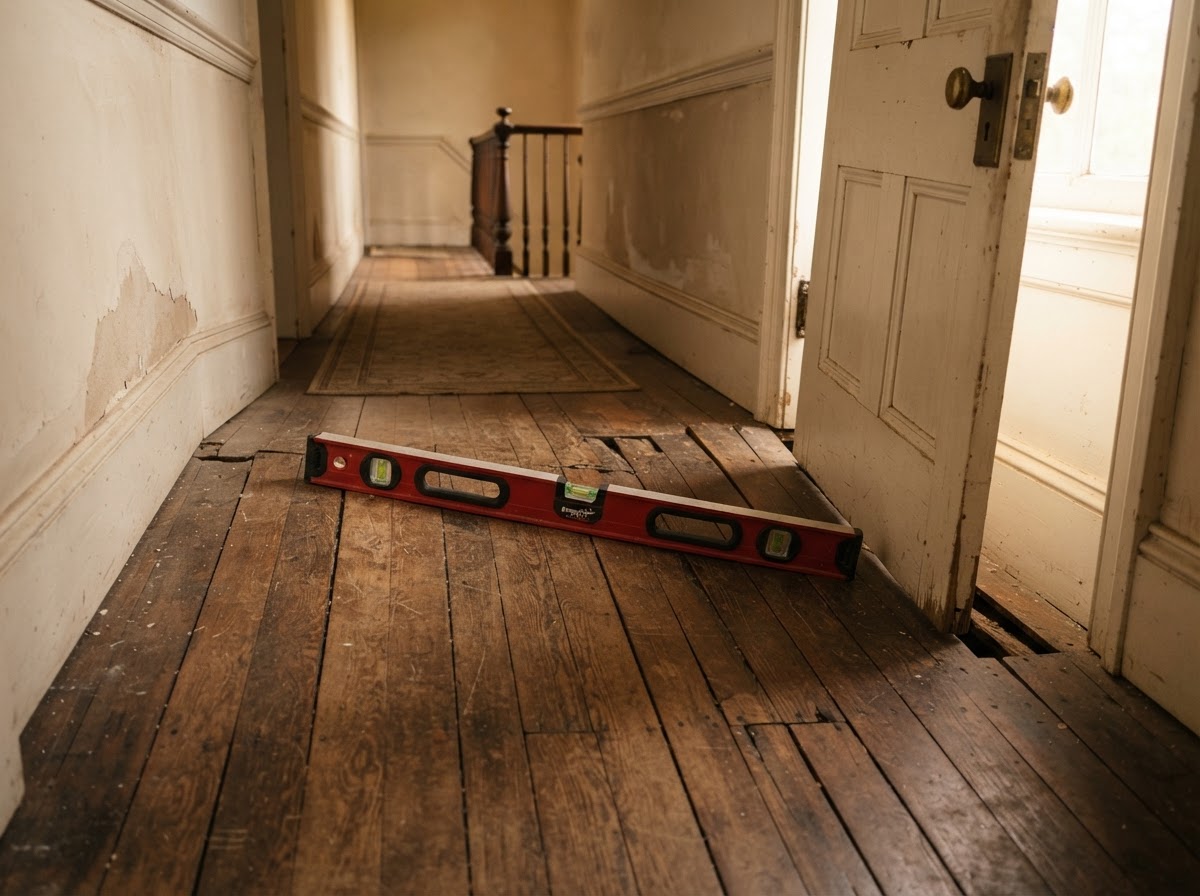
Settlement is the slow, uneven dropping that most older Glen Allen homes go through over decades. One side of the house settles a little faster than the other, and the symptoms show up inside: floors that slope, doors and windows that stick, drywall cracks over windows and gaps opening at trim. It is gradual, not a sudden drop.
Foundation Settlement Repair in Glen Allen & the Henrico–Hanover area
Settlement is the slow, uneven dropping that most older Glen Allen homes go through over decades. One side of the house settles a little faster than the other, and the signs show up inside long before they're obvious outside: floors that slope, doors and windows that stick or won't close, drywall cracks over openings, and gaps opening at trim and baseboards. It's gradual, not sudden — a home may settle a quarter inch over ten years. Our job is to figure out what's actually moving and why, then stabilize the home so it stops. That often means piers under the settling side to transfer its weight to stable soil, or targeted reinforcement where the movement is limited.
Proud to Serve Glen Allen & the Henrico–Hanover Area
We work throughout Glen Allen and the towns around it. If your home is in any of these communities, we can come take a look.
- Mechanicsville, VA Hanover County
- Laurel, VA Henrico County
- Short Pump, VA Henrico County
- Tuckahoe, VA Henrico County
- Highland Springs, VA Henrico County
- Lakeside, VA Henrico County
- Ashland, VA Hanover County
What's Included
Settlement diagnosis
We measure floor slope, check door and window alignment, and find which side of the home is dropping.
Pier stabilization
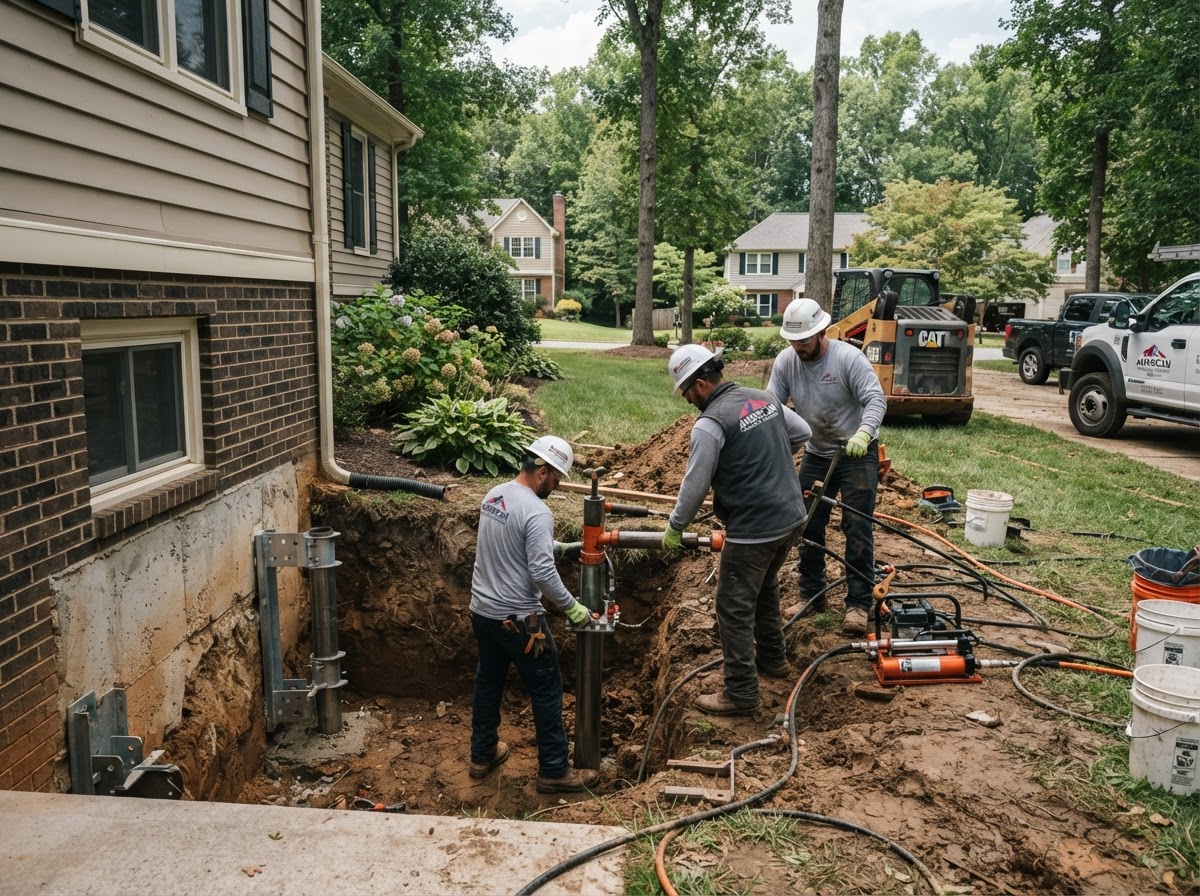
Push or helical piers under the settling area transfer the home's weight to load-bearing soil to stop movement.
Floor leveling assessment
We evaluate whether floors can be brought back toward level and what's realistic for an older home.
Sticking door & window relief
Once the home is stabilized, doors and windows often free up as the frame stops twisting.
Cause investigation
We trace the settlement to soil, drainage, or a weak foundation so it doesn't simply resume.
Why This Happens in Glen Allen
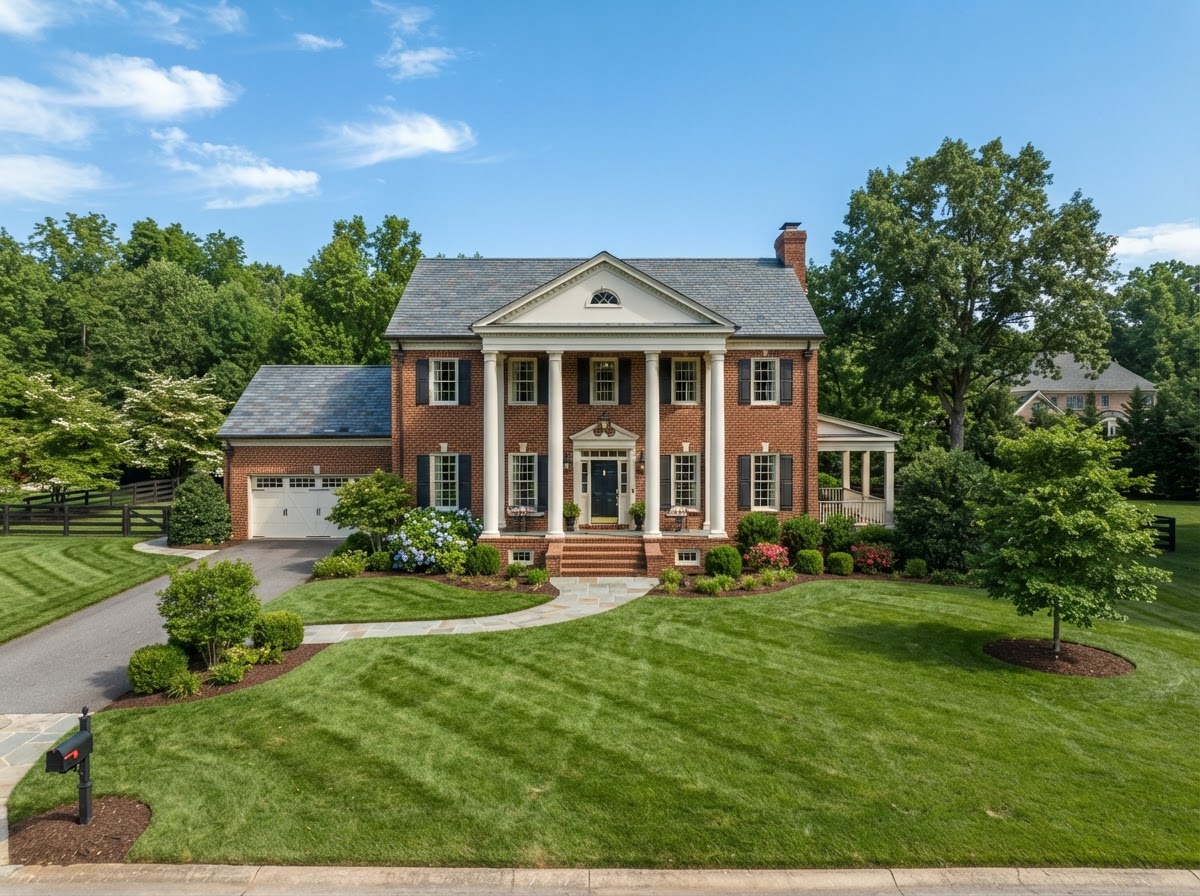
Across Glen Allen and the Henrico–Hanover area, settlement is mostly a soil story. Our clay-heavy soil expands when it's wet and shrinks when it's dry, and with 40-plus inches of rain a year plus dry stretches in summer, the ground beneath a home is constantly breathing. When the soil shrinks under one corner, that corner drops. Many homes here are older block-foundation or crawl-space houses built decades ago on soil that's been cycling ever since, and newer subdivisions on compacted fill can settle as that fill consolidates. Add tree roots pulling moisture from the clay and poor drainage concentrating water on one side, and a home can settle unevenly even when nothing else is wrong with it.
How to Help Prevent It
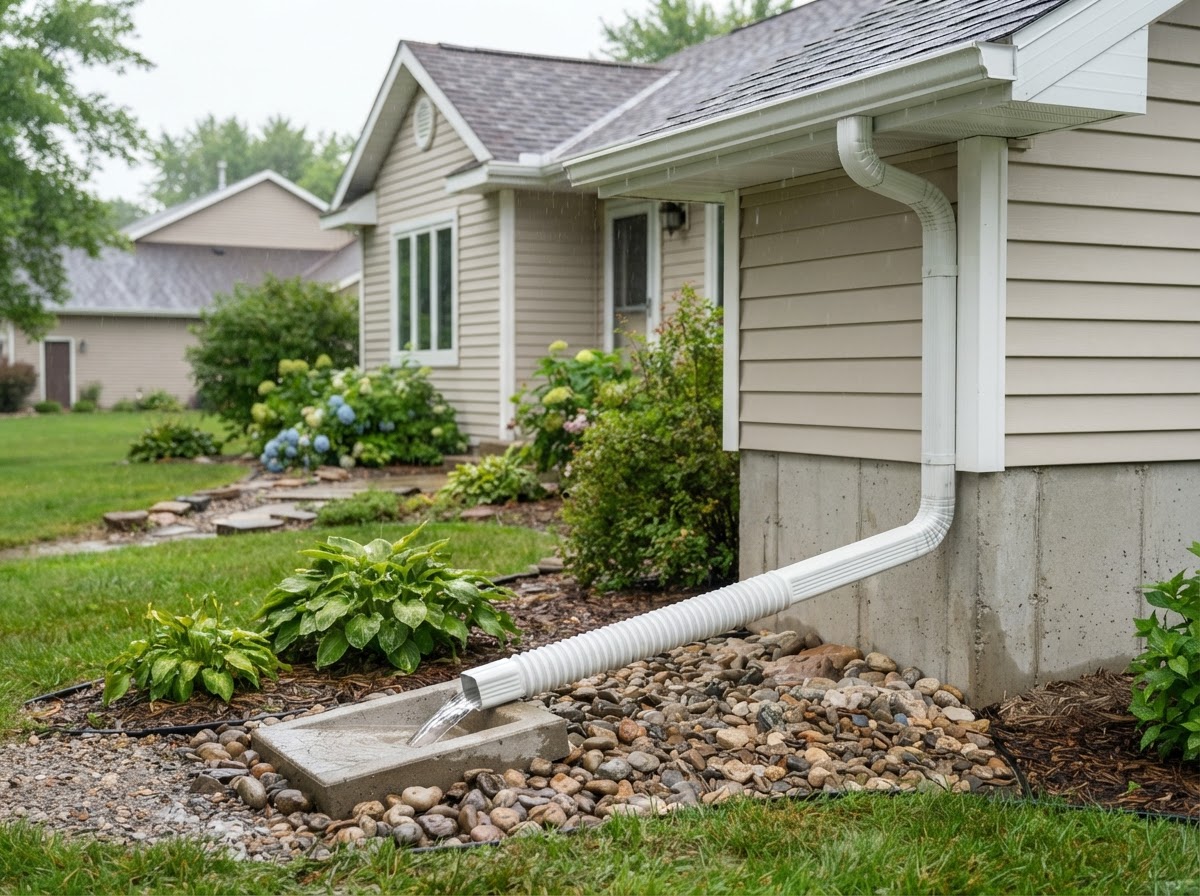
Keep soil moisture around the foundation as steady as you can — a soaker hose during dry spells keeps the clay from shrinking and pulling away. Direct downspouts well away from the house and slope the ground so water runs off, not toward, the foundation. If large trees sit close to the house, consider how their roots draw moisture from the soil. Watch the early signs — a door that starts sticking or a new drywall crack — and have them looked at before a quarter inch becomes an inch.
Foundation Settlement Repair Cost Guide
We won't invent a price before we've seen your home. Here's what affects the cost of each kind of repair.
| Repair type | Typical price | What affects cost |
|---|---|---|
| Limited single-side stabilization | Free quote after inspection | Number of piers needed on the settling side, soil depth to stable strata, and yard access. |
| Multiple-side or perimeter stabilization | Free quote after inspection | How much of the home is settling and whether lifting toward level is realistic for the structure. |
| Settlement with related repairs | Free quote after inspection | Whether doors, floors, or drywall also need attention once the home is stabilized. |
Why Choose Us for Foundation Settlement Repair
We measure before we plan
Floor slope and movement get measured, so the repair targets the side that's actually dropping.
Stabilize first, lift if right
We stop the movement, then assess honestly whether lifting toward level is safe and worth it.
We fix the soil cause
Drainage and moisture get addressed so the home doesn't simply start settling again.
Concerned About foundation settlement repair?
A free, honest visit settles the question. We'll look carefully and tell you plainly what your home needs.
Our Process
- 1
Free inspection & measurement
We map floor slope, door alignment, and cracks to find where and how much the home has settled.
- 2
Diagnosis & plan
We explain what's moving, why, and the stabilization options in plain terms.
- 3
Pier installation
Piers are driven to stable soil and the settling side is supported, and lifted where appropriate.
- 4
Cause & follow-up
We address drainage or moisture and show you how to watch for any further change.
Foundation Settlement Repair FAQ
Questions we hear most about this repair. Call us with anything else.
Is settlement normal, or a sign of a serious problem?
A small amount of settlement is normal — nearly every home does it as the soil compacts in the first years, and older homes continue slowly. What matters is whether it's ongoing and uneven. If one side is still dropping and the signs are getting worse — doors that stick more each year, new cracks — that's worth stabilizing. If the home settled decades ago and has been quiet since, it may just need monitoring. We measure the movement to tell the difference before recommending anything.
Can you make my floors level again?
Often, yes, but it depends on the home. Piers can lift a settled side back toward level, and the closer to level we bring it, the more doors and windows free up. With older homes there's a limit — some floor slope may be permanent after decades, and forcing it perfectly level can cause new cracking. We tell you honestly what's realistic before we start, and we aim for stability first, improvement second.
Will stabilizing stop my doors from sticking?
In most cases, yes. Sticking doors and windows are usually a symptom of the frame twisting as the foundation moves. Once the home is stabilized and lifted where appropriate, the frame settles back and the doors free up. If a door has been planed or cut to fit the settled frame, it may need a small adjustment afterward — we let you know what to expect.
Our Other Services
Foundation problems often overlap. Here are the other repairs we handle across Glen Allen & the Henrico–Hanover area.
Get Your Free Estimate
Tell us what's going on. We'll call you back to schedule a free, no-pressure look at your foundation.
No obligation. We answer questions honestly and never pressure homeowners into repairs they don't need.